
Detailed Review of Apple EarPods USB-C Wired

Detailed Review of Apple EarPods USB-C Wired

You may be replacing earbuds or looking for a reliable wired option for USB-C devices. The Apple EarPods Headphones with USB-C Plug are important because they give you plug-and-play USB-C compatibility with many modern iPhones, iPads and Macs and a familiar inline remote and microphone.

Understanding this product helps you decide whether a simple, dependable wired set meets your daily needs—clear calls, basic media controls, and consistent audio—without the complexity of wireless pairing or batteries. This review explains what to expect in sound, fit, controls, and build so you can determine if these Apple EarPods (USB-C Wired) fit your routine.

TL;DR

Feature

Verdict

Ease of Use

⭐️⭐️⭐️⭐️⭐️ ⏱️ – Plug-and-play across USB-C Apple devices; no pairing or charging required

Sound Quality

⭐️⭐️⭐️⭐️ 🪄 – Clear, balanced audio for everyday listening and gaming with decent bass for wired buds

Fit & Comfort

⭐️⭐️⭐️⭐️ 🎧 – Ergonomic shape fits many ears comfortably for long sessions, though fit varies by ear shape

Controls & Mic

⭐️⭐️⭐️⭐️ 🎤 – Responsive inline remote and reliable microphone for calls and media control

Durability & Compatibility

⭐️⭐️⭐️⭐️ 🔌 – Solid USB-C connection and broad Apple device compatibility; treat the connector with care

Apple EarPods (USB-C Wired)

EarPods with USB-C plug, built-in remote for music, calls and volume, integrated microphone, and ergonomic in-ear design for improved comfort.

If you want a simple, reliable wired option that just works with USB-C devices, the Apple EarPods (USB-C Wired) are exactly that. You plug them in, the in-line remote and mic let you handle calls and control playback without digging for your device, and the ear-shaped design aims to sit comfortably for hours. They don’t pretend to be noise-cancelling or studio-grade, but for everyday listening, commuting, calls and even casual gaming they’re a straightforward, dependable pick.

If you prefer wired headphones that are low‑fuss and compatible across phones, tablets and laptops, these make a sensible everyday companion.

What People Say

People frequently praise the comfortable ear-shaped design, dependable USB-C connection and the handy in-line remote and mic. Reviews often note the sound is clear and balanced for everyday music and calls, while occasional issues mentioned include fit varying by ear shape and the cord or connector feeling stiff at first.

Overall Sentiment: Positive

Sentiment Analysis Chart

Pros

Cons

Comfortable ergonomic design for many ear shapes

Fit can feel loose or large for some ears

Reliable USB-C plug with immediate connectivity

Cord can be a bit stiff when new and may tangle

Integrated remote and microphone for calls and playback

USB-C plug is somewhat flexible — handle gently

Consistent, clear audio for everyday use

No active noise cancellation or wireless features

Use Cases

Situation

How It Helps

Commuting and travel

You can plug in quickly and use the remote to skip tracks or answer calls without pulling out your phone, and the ergonomic shape stays reasonably comfortable on longer journeys.

Work calls and meetings

The integrated microphone captures voice clearly and the built-in controls make muting or adjusting volume fast and simple while you’re on calls.

Light workouts and walking

The EarPods’ shape often stays put during movement, giving you a no-fuss wired option when you don’t want to worry about battery life.

Laptop or desktop use

Plugging into a USB-C port on a laptop or PC gives reliable audio and mic functionality for video chats or gaming without pairing or adapters.

Ease Of Use

Feature

Ease Level

USB-C Plug

Easy

In-line Remote (play/pause, volume)

Easy

Microphone for calls

Easy

Cable handling and storage

Moderate

Versatility

These EarPods work with a wide range of USB‑C devices — phones, tablets and laptops — so you can move between devices without adapters. They’re suited to music, calls, light exercise and even casual gaming, making them a flexible wired choice.

Comfort

The molded EarPods shape aims to match the ear’s geometry, so many people find them more comfortable than round earbuds for extended wear. Fit can vary though, so you may need to adjust placement to keep them from slipping.

Key Benefits

  • Plug-and-play USB-C compatibility with many modern devices
  • Built-in remote and microphone for effortless calls and controls
  • Ergonomic EarPods shape designed for extended comfort
  • Clear, balanced sound suited to daily listening

Rating: 4.6 (total: 20957+)

Shop Now

FAQ

Are Apple EarPods (USB-C Wired) Compatible With My Device And How Do I Set Them Up?

You can plug Apple EarPods (USB-C Wired) directly into any device with a USB-C audio port and they work immediately without pairing because they are wired, not Bluetooth. Most recent Apple iPhone, iPad, and Mac models with USB-C will support audio, the microphone, and the inline media controls, but functionality can vary on some non‑Apple devices or older USB-C ports that do not carry analog or digital audio; if a control or mic does not work, try another USB‑C port, check your device's audio output settings, and inspect the port for lint or debris. If you get no sound, make sure the connector is fully seated, the device volume and application output are not muted, restart the device, and test the EarPods on a second device to isolate whether the issue is with the headphones or the port.

What Should You Expect From Sound Quality, Fit, And Noise Isolation?

You should expect clear, balanced sound that suits everyday listening, calls, and gaming rather than high‑end audiophile performance, and the specification of 40 ohms impedance helps explain why they play well from phones and laptops without an amplifier. The design follows the ear's geometry so many users find them comfortable for long sessions, but fit varies by ear shape and the smooth housing can make them prone to slipping for some users, so consider simple fit fixes like third‑party ear hooks or covers if they feel loose.

These EarPods do not offer active noise cancellation and at higher volumes sound can leak out, so be mindful of volume for both hearing safety and privacy, and use proper insertion angle to improve bass and isolation.

How Durable Are They And What Practical Care Tips Or Buying Considerations Should You Know?

You should treat Apple EarPods (USB-C Wired) as everyday disposable electronics: the plastic housings and retractable cable are lightweight and convenient but the product is not water resistant and the USB‑C connector can be stressed if bent repeatedly, so handle the connector gently and store the cable without sharp kinks. For longer life, unplug by the plug rather than tugging the cable, keep the port clean, wipe the earbuds with a dry cloth after heavy use, and avoid exposing them to moisture or extreme heat.

If you need stronger retention, water resistance, wireless convenience, or active noise cancellation, choose a different model; if you value a reliable plug‑and‑play wired option with built‑in mic and media controls for calls, commuting, or work, these EarPods are a practical choice.

Why Choose EarPods

You choose Apple EarPods USB-C because they give you a simple, reliable plug‑and‑play connection with devices that have a USB‑C port, so you never worry about pairing or battery life. You also get the familiar Apple‑tuned sound, a comfortable fit with an inline remote and mic for calls and Siri, and solid build quality at an affordable price.
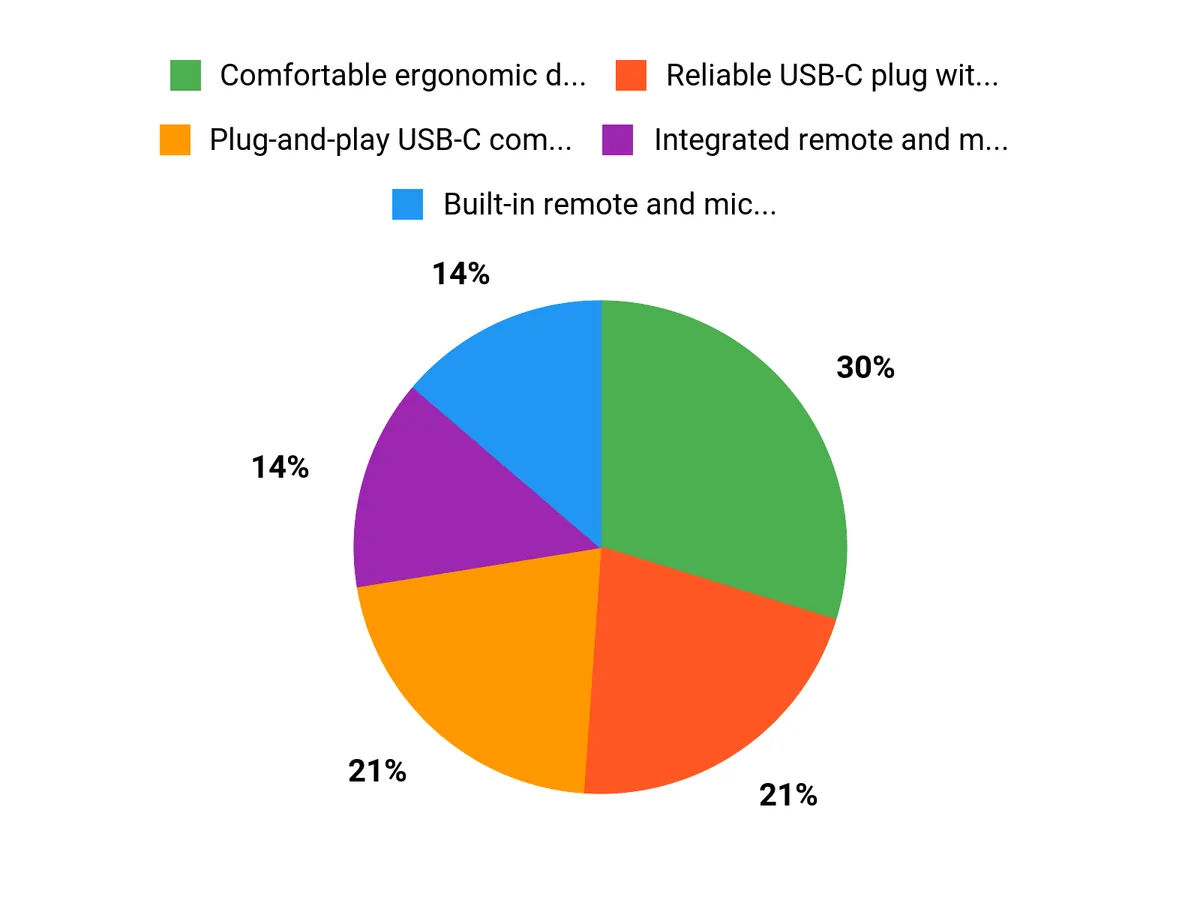
Why Choose EarPods Chart

Wrapping Up

If you need a straightforward wired option for modern Apple devices, the Apple EarPods Headphones with USB-C Plug give you reliable USB-C compatibility, simple inline controls, and clear, balanced sound suited to everyday listening, calls, and light gaming. You get a durable connector and a familiar ergonomic shape that works well for many users. Expect a dependable, no-frills listening experience that covers core needs without extras like noise cancellation or wireless freedom.


Comments

Popular posts from this blog

Why Unencrypted DNS Still Rules and How You Can Break Free

Ever stumbled across a detail online that made you stop mid-scroll, like learning that the majority of your internet queries are still open to prying eyes? For years, I assumed the modern web meant modern privacy. Then, a coffee shop chat with a network engineer friend turned my assumptions upside down: "Most folks have HTTPS, but their DNS is still as open as a library book." That revelation hit hard. In today’s data-driven world, understanding how your DNS traffic is handled—and how to encrypt it—might be the most overlooked privacy step. Here’s what’s really going on, and how you can (finally) take control. The Curious Case of Unencrypted DNS: Why It Still Dominates In an era where HTTPS is nearly universal and most web traffic is encrypted, it’s surprising how many people still rely on unencrypted DNS. This creates real DNS privacy risks, exposing users to ISP DNS monitoring and ...

Why we should use a VPN

  Benefits of VPN and why use a VPN? Protect your privacy: When you connect to the internet, your internet service provider (ISP) can track and monitor your online activities. Using a VPN encrypts your internet connection, making it impossible for your ISP to track and monitor your online activities. Secure public Wi-Fi: Public Wi-Fi is a common target for hackers and cybercriminals. By using a VPN, you can secure your internet connection and protect your data from being intercepted on public Wi-Fi networks. Access geo-restricted content: Some websites and services are restricted to specific countries or regions. A VPN allows you to change your virtual location, allowing you to access these geo-restricted websites and services. Bypass censorship: Some countries censor certain websites and online content. A VPN can help you bypass censorship and access restricted content. Best VPNs to Use: NordVPN: NordVPN is a popular VPN service that offers fast, secure, and reliable connections. ...

Beginner’s Guide to Programming

 -The Beginner’s Guide to Programming Table Of Contents   Chapter 1: Understanding Programming Concepts And How They Work Chapter 2: Techniques Of Writing A Program  Chapter 3: The List Of Programming Languages  Chapter 4: How To Choose The Right Compiler  Chapter 5: What Is An Interpreter  Chapter 6: Writing Your Program With An Editor  Chapter 7: The Functions Of A Debugger  Chapter 8: Ease Your Burden With Components  Chapter 9: Optimizing Your Program With Profiler  Chapter 10: Installing Your Program. Wrapping Up   Foreword  There are several different concepts that an individual needs to understand before being able to tackle the issue of programming concepts and how they unfold.  Introduction: Programming is the act of designing, writing, testing, and maintaining the source code for computer programs.  Programming is a field that requires knowledge in mathematics, logic, sciences, and engineering.  Th...

Spyware Removal Tricks and Advice

-Spyware Removal Tricks and Advice Contents Chapter 1 What is Spyware?  Chapter 2 How is Spyware different from  Viruses &Worms? Chapter 3 Can I Just Ignore Spyware?  Chapter 4 What Damage Can Spyware Do?  Chapter 5 How does Spyware Get onto Your Computer?  Chapter 6 How to Prevent Spyware  Chapter 7 What is Antispyware & How Does it Work?  Chapter 8 Can I Use “All-Around” Computer Security Software?  Chapter 9 Free Antispyware Software  Chapter 10 Rogue Antispyware Software  Chapter 11 Choosing Antispyware Software Chapter 12 Do You Need to Update Antispyware?  Chapter 13 How to Get Rid of Spyware  Chapter 14 Spyware Removal in Safe Mode  Chapter 15 Manual Removal of Spyware  Chapter 16 Manual Spyware Removal without Instructions  Chapter 17 Combating Browser Hijackers  Chapter 18: Spyware that Prevents You from Running Antispyware  Chapter 19 Spyware that Prevents You From Starting in Safe Mod...

Computer Technology Overview

- Computer Technology: An Overview of Laptops, Desktops, Tablets, and Cell Phones Computer technology has come a long way since its inception. The modern world is now dominated by a wide range of computing devices, from laptops and desktops to tablets and cell phones. These devices have transformed the way we live, work, and interact with each other. In this blog, we'll take a look at the different types of computer technology and how they've evolved over the years. Laptops: Portable Powerhouses Laptops are the most versatile computing devices. They offer the convenience of a desktop computer and the portability of a tablet. Over the years, laptops have become smaller, lighter, and more powerful, making them the perfect device for people on the go. Today, laptops are equipped with high-end hardware and software, making them suitable for tasks such as video editing, gaming, and even scientific research. Desktops: The Workhorses Desktops are traditional computing devices that hav...

Buying Refurbished Computers. What you need to know.

-Buying Refurbished Computers Refurbished products are those that have been fixed or repaired and sold to consumers at a lower price than new products. Refurbished goods help the environment because it means less wasted materials and less energy used. Refurbished computers come with all the same parts as a new computer, but they may also be missing some of the extras like a mouse or keyboard. Refurbished electronics can include anything from MP3 players to microwaves. When buying refurbished items, make sure to check what is included in the package before you buy it. They are a great way to save money and help the environment because these devices can be recycled at the end of life. The biggest difference between used, open-box, and refurbished is that refurbished products come with a warranty in some cases, or in some cases, they might even come with new parts. The benefit of buying refurbished electronics is that you can purchase these items at low prices while still getting access t...

Mac vs Windows OS

- The Mac operating system (OS) and Windows OS are two of the most popular operating systems in the world, used by millions of people every day. Although they both perform the same basic functions, there are several key differences between the two that set them apart from one another. User interface: The most obvious difference between the two operating systems is their user interface. Mac OS has a cleaner, more minimalist look, with a focus on simplicity and ease of use. Windows OS, on the other hand, is more customizable, allowing users to personalize the look and feel of their system. Software compatibility: Mac OS is limited in terms of software compatibility, as it only runs on Apple hardware and is limited to a smaller number of applications compared to Windows OS. Windows OS, on the other hand, is much more versatile, allowing users to run a wider range of software and hardware. Hardware: Mac OS is only available on Apple hardware, while Windows OS can be installed on a wide ran...

Future of Technology and Computers

- In recent years, technology has made incredible advances and continues to shape the world we live in. Computers have played a major role in this progress and have revolutionized the way we live, work, and communicate. From desktops to laptops, from cell phones to smartwatches, computers have become an integral part of our daily lives. In this blog, we'll take a look at the future of technology with computers and what we can expect in the coming years. Cell Phones and Laptops Cell phones and laptops are two of the most widely used computer devices today. As technology continues to advance, we can expect these devices to become even more powerful and versatile. For example, cell phones are becoming increasingly more capable of handling complex computing tasks and are being used for more than just making calls and sending messages. In the future, we can expect cell phones to be used for virtual reality and augmented reality experiences, as well as for advanced gaming and entertainme...

Best Cell Phone Review 2023

- The world of smartphones is constantly evolving, with new models and features being released every year. This can make it challenging to decide on the best cell phone for personal use. However, there are certain brands and models that stand out as the best options for most people. Here is a list of the best cell phones for personal use in 2023. iPhone 12 Pro Max: Apple's latest iPhone is a top-of-the-line device that offers an impressive array of features and a sleek design. The Pro Max model boasts a large 6.7-inch OLED display, a powerful A15 Bionic chip, and a triple-camera setup that includes a 12-megapixel ultra-wide, wide, and telephoto lenses. With 5G support and excellent battery life, this is a great choice for anyone looking for a high-end smartphone. Samsung Galaxy S21 Ultra: Samsung's latest flagship smartphone offers cutting-edge technology and a large, high-resolution display. The S21 Ultra features a 6.8-inch Dynamic AMOLED screen, 5G support, and a powerful Ex...

Windows 10 and 11 Operating System Speed Tweaks

 - Windows 10 and 11 are two of the most popular operating systems in the world, and both are designed to be fast and responsive. However, as with any software, over time, the speed and performance of Windows 10 and 11 can begin to degrade. This can be caused by a variety of factors, such as hardware limitations, system updates, or a cluttered hard drive. If you're experiencing slow performance on your Windows 10 or 11 machine, there are several tweaks and tips you can use to improve speed and response time. Here are a few of the most effective ways to speed up your Windows operating system: Disable Startup Programs: Over time, you may have installed various software and applications that launch automatically when your computer starts. This can slow down the boot process and consume system resources, leading to decreased performance. You can use Task Manager to disable these startup programs, which will free up memory and improve performance. Uninstall Unused Programs: Uninstalling...